Women in medical leadership- How we are fighting to close the gap

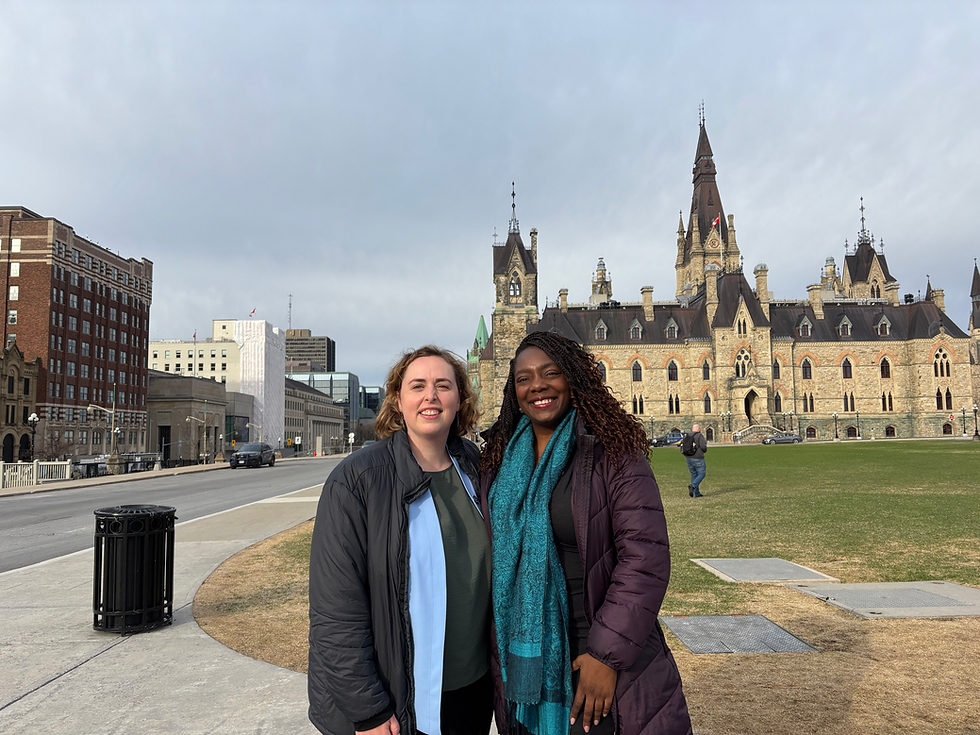
I became president of the Ontario Medical Association (OMA) on May 8, 2026. And with my installation into the role, history was made. My predecessor is the incredible Dr. Zainab Abdurrahman who was our first black woman physician to represent our membership. Together, she and I became the first back to back women in 145 years to be president. And in the very same year, we have seen a similarly exciting transition for our chair of the board as Dr. Sharon Bal and Dr. Cathy Faulds represent our first back to back women in the role.
This is an incredible feat, but its celebration is tempered by the knowledge that it took 145 years to achieve. Women have fought for the right to be physicians since the late 1800s in Canada, and while it has taken some time we now live in a world where women represent over 50% of medical school classes in Canada.
This was only possible because of the incredible trailblazers that came before us. In one of my first public appearances as president, I was able to attend the The Legends of Medicine, an event in Hamilton which celebrates physicians who have contributed greatly to our field with a lifetime achievement award. This year, Dr. Irene Turpie was honoured for her incredible career in geriatric medicine. Listening to her speak about her experience was incredibly moving. She was outnumbered by her male colleagues and was denied entry into the Medico-Chirurgical Society (medical society) until years after her graduation because of her gender. It is because of her and her colleagues, women who did not let challenge and discrimination deter them from their goals, that I sit here in my position today. To all of them, I say thank you.
And while we are seeing these welcome changes at the OMA, we have yet to achieve closing the gender gap in medical leadership. A 2024 study demonstrated that while women represent approximately 40% of faculty appointments across the country, the presence of women appointments decreases significantly as you increase in academic rank (e.g. 50.8% of associate professors vs. 28.1% of full professors) [1]. While we have seen increasing representation of women in the field of medicine, we are not seeing the same increasing representation in our leadership.
And representation matters. Women physicians provide excellent care and are talented, capable leaders. Our structures and institutions are not evolving at the pace we need to ensure equitable representation (and this is not limited to gender). We will require fulsome, institutional level reform to ensure that we are continuing to balance this inequity. The OMA has made a commitment to this work by creating the OMA Women Forum. This is the first official group representing the interests of women-identifying physicians across the country in any of our provincial and territorial medical associations.
All women-identifying physicians, gender-diverse physicians and allies in Ontario are welcome and are encouraged to join this new group. With strength of numbers, OMA Women will be better able to fight for equity across the medical field as well as address the gender pay gap (a topic for a future blog post). I encourage all interested OMA members to sign up. You can do so by logging into the OMA website, clicking on your name in the top right corner, then clicking on “my account.” This will take you to your profile where you can select “Groups” and under Forums you can add yourself to the OMA Women Forum. Our voices are stronger when we use them collectively. Please join us in impacting change.

ohblessedkevinchimmuanya@gmail.com
I love Canada I will be happy to be in Canada also I need a female single doctor between 35. to44 years old for serious relationship . Hope am in
Very inspirational! Having a Black Muslim woman as president of the OMA was great for representation.
As an advocate for equity deserving groups, what’s your opinion on the OMA policing political symbols (e.g. a watermelon pin) at events like the most recent AGM?
Thanks in advance!